

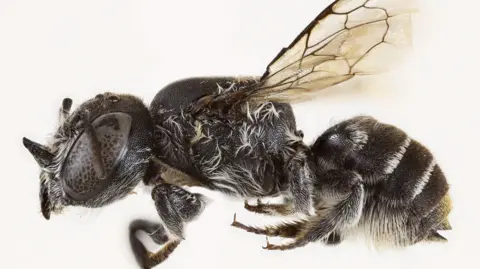
Experts in the Australian continent have discovered a new native bee species that sports tiny projections—earning it a fitting fiery moniker.
Finding in Remote Wildflower Environment
Scientists observed the Megachile Lucifer while observing a scarce wildflower that grows only in the Bremer mountain area, located in Western Australia's Goldfields area, about 470 kilometers east of the city of Perth.
Distinctive Horns and Possible Uses
The female remarkable, visible horns could function as a protective feature, for collecting pollen or nectar, or to gather materials like sticky sap for constructing nests.
"The female had these remarkable tiny horns on its face," stated the scientist in charge.
Designation Influence and Meaning
The lead scientist explained that she was motivated to select the name Lucifer while viewing the Netflix show of the identical title at the moment. She added that this represents the initial new member to this category of bees in 20 years.
"When writing up the description of the new species I was viewing the Netflix show Lucifer at the moment, and the name just was ideal. I am also a huge fan of the TV character Lucifer so it was a easy decision."
Lucifer—which means "light bringer" in the Latin language—additionally symbolizes shining light on the necessity for improved conservation of local bees and greater awareness of how endangered flora are fertilized.
Protection Calls and Ecological Risks
The study, published in the Journal of Hymenoptera Research, also urged the region where the new bee species and rare wildflowers were discovered to be "formally protected and designated as conservation land that cannot be cleared."
"Because the recent discovery was found in the same limited region as the endangered wildflower, could be at risk from environmental disruption and other threatening processes like global warming," she stated, adding that many industrial operations do not include local bee species when assessing the ecological effects of their activities.
"So we could be overlooking unknown types, such as those that play vital functions in sustaining endangered flora and ecosystems.
"Without knowing which native bees exist and what flora they depend on, we face the danger of losing track of each before we even realise they're there."
- Recently identified native bee with horns
- Discovered in Australia's western region
- Projections could serve for protection, gathering resources, or constructing homes
- Name influenced by well-known TV show
- Calls for increased protection of bee habitats


